Ask Our Reliable Insurance Brokers Today!
Protect Your Business with the Right Insurance Partner. Click now to get started on protecting your future with FD Beck!

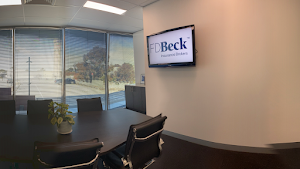
Our ability to access markets, undertake portfolio reviews enables our client to make successful decisions
Our ability to access markets, undertake portfolio reviews enables our client to make successful decisions
Our ability to access markets, undertake portfolio reviews enables our client to make successful decisions
When things go wrong, liabilities may affect your assets and reputation. That’s where FD Beck may help you through our competitive consultant and consulting business insurance.
Our ability to access markets, undertake portfolio reviews enables our client to make successful decisions
For protection and insurance of your residential investment & personal belongings in Australia. Get instant quote today!
Our ability to access markets, undertake portfolio reviews enables our client to make successful decisions
Public Liability Insurance costs vary between Australian small businesses because insurers assess each business according to its activities and risk profile. Your occupation, turnover, work locations, claims history, liability limit and excess can all influence the premium you pay. This guide explains the key pricing factors and how to compare quotes for your business.
There is no single standard price for Public Liability Insurance that applies to every Australian small business.
A home-based consultant with limited face-to-face customer interaction can present a very different liability exposure from a cleaner working at client premises, a tradesperson using tools on construction sites or a retailer serving customers throughout the day.
As a result, their premiums can also differ.
Published Australian insurance-market averages can provide a useful starting point for budgeting. However, an average should not be treated as the amount your particular business will pay. Small business owners should also compare the scope and terms of different Insurance policies rather than relying on premium alone.
Pricing can vary depending on:
The most reliable way to determine the cost for your small business is to obtain a quote using accurate information about your current operations.
Important: Published averages and indicative premiums are general budgeting information only. Your actual premium will depend on your individual business circumstances and the insurer’s underwriting criteria.
Understanding what you are paying for is an important part of comparing Public Liability Insurance costs.
In Australia, Public Liability is commonly provided together with Products Liability under a combined Public and Products Liability policy. This combined structure helps address both public liability and product liability exposures, subject to the policy terms.
Public Liability generally covers a business’s legal liability for third-party personal injury or property damage arising from covered business activities, subject to the terms, conditions, exclusions and limits of the policy.
For example, a liability claim could arise if:
An insured liability claim may also involve legal defence costs, depending on the terms of the policy. Public liability claims can vary substantially in circumstances and severity, which is why the applicable policy wording and liability limit are important. Public Liability Insurance does not cover every business risk.
Employee injuries are generally dealt with under applicable workers compensation arrangements. Injuries to the business owner are not automatically covered by Public Liability Insurance and may require separate cover.
Claims arising from professional advice, designs, recommendations or other professional services may instead fall within Professional Indemnity Insurance, depending on the circumstances and policy. Professional indemnity can therefore be an important consideration for businesses providing professional advice or services where Public Liability Insurance does not address that exposure.
Likewise, your own business property, equipment and other operational risks may require appropriate Business Insurance or other specific cover.
Insurers consider the nature and scale of your business when assessing liability risk.
Two businesses operating in the same industry may therefore receive different premiums because their actual activities and exposures are not necessarily the same.
The exact work your business performs is one of the important factors an insurer may consider.
Different occupations can create very different opportunities for third-party injury or property damage.
For example:
| Business activity | Examples of potential liability exposure |
|---|---|
| Office-based consulting, bookkeeping or IT support | Visitors to premises, accidental damage while attending client sites |
| Photography, beauty and mobile services | Work at customer premises, equipment and customer interaction |
| Cleaning | Slips and falls, accidental damage to customer property |
| Retail and cafés | Customer foot traffic, premises-related incidents and products supplied |
| Landscaping and trades | Tools, machinery, client property and worksite activitiesd |
| Construction and demolition | Physical works, multiple contractors, worksites and potentially severe third-party incidents |
| Events | Public attendance, temporary equipment, venues and third-party property |
These examples are illustrative only. They are not insurer risk classifications, and individual insurers may assess occupations and activities differently.
Your occupation title alone may not provide enough information.
For example, two carpenters may have different exposures if one performs internal fit-outs while the other regularly works at height or on large construction sites.
Providing an accurate description of what you actually do helps an insurer or insurance broker obtain a quote based on your real activities.
Turnover is one of the factors many insurers may consider when pricing Public Liability Insurance.
Higher turnover can sometimes indicate a greater volume of work, more customers or a larger overall operation.
However, turnover does not determine liability exposure on its own.
A high-turnover office-based business may present very different risks from a smaller contractor performing hazardous physical work.
Insurers may therefore assess turnover alongside your occupation, activities and other business information.
Your workforce structure can also affect how an insurer assesses your business.
Insurers may ask:
Employees and subcontractors can increase the number of jobs, worksites and third-party interactions associated with your business.
Requirements differ between insurers, so provide accurate workforce information when requesting a quote.
The way your business interacts with customers and members of the public can influence its liability exposure.
For example, insurers may consider:
A business operating primarily online may present a different Public Liability exposure from a café, retail store or tradesperson regularly working at customer premises.
The locations and environments in which your business operates can also be relevant.
Consider the difference between:
The insurer may consider not simply where the business is based, but also where work is performed and the activities carried out at those locations.
Previous liability claims may influence an insurer’s assessment of your small business.
However, there is no universal percentage increase that applies whenever a business has made a claim.
An insurer may consider:
One isolated claim may therefore be assessed differently from a pattern of repeated similar claims. A history of public liability claims may be considered alongside the business’s current activities and risk controls when an insurer assesses the risk.
Depending on the insurer and circumstances, claims history may affect the premium, excess, policy terms or whether an insurer is prepared to offer cover.
Provide accurate claims information when requesting quotes so insurers can assess your business correctly.
The amount of Public Liability cover you select can affect your premium.
Public Liability Insurance is available with different limits of indemnity, with $5 million, $10 million and $20 million among the limits available in the Australian market.
The price difference between these limits varies between insurers and individual businesses.
Do not select your liability limit based solely on which option produces the cheapest premium.
Your required limit may be influenced by:
For example, some Australian government procurement arrangements specify a minimum $20 million Public Liability Insurance requirement for contractors.
That does not mean every Australian small business needs $20 million cover. It demonstrates why contractual and other requirements should be checked before choosing a liability limit.
For a detailed explanation of different liability limits, see How Much Public Liability Insurance Cover Do I Need?
An excess is the amount you may need to contribute towards an insured claim, subject to the terms of your policy.
Selecting a higher excess can sometimes reduce the premium because your business retains a greater portion of the financial risk.
However, a lower premium does not necessarily make a higher excess the right choice.
Consider whether your business could comfortably pay the applicable excess if a claim occurred.
When comparing Public Liability Insurance quotes, look at the premium and excess together.
Also check whether different excesses apply to particular types of claims or business activities.
In Australia, Public Liability and Products Liability Insurance are commonly provided together under a combined Public and Products Liability policy. For small business owners, understanding both the public liability and product liability components can help clarify how the combined policy relates to their activities.
Public Liability generally relates to legal liability for third-party personal injury or property damage arising from your business activities.
Products Liability generally relates to injury or property damage associated with products your business manufactures, imports, distributes, sells or supplies.
If your small business supplies products, the nature of those products may therefore be relevant when an insurer assesses your liability exposure and premium. Products exposure can vary considerably between businesses, so accurately disclose what your business manufactures, imports, sells, supplies or distributes.
The way the policy limit applies can also differ between Public Liability and Products Liability claims. Check the policy schedule and wording to understand the cover being provided, including any applicable aggregate limits.
Being a sole trader does not automatically mean you will pay a particular Public Liability Insurance premium.
Insurers generally need to understand what the business does rather than simply its legal structure.
A sole trader providing bookkeeping services from home can present very different liability exposures from a sole-trader electrician, landscaper or builder working at customer premises.
Factors such as your:
can all influence the quote.
This is why a generic “sole trader Public Liability Insurance price” should only be treated as an indicative benchmark rather than the price your business will necessarily pay.
Public Liability Insurance is not a universal legal requirement for every small business in Australia.
However, certain occupations may have Public Liability Insurance requirements under applicable state or territory rules.
Cover may also be required because of a:
A client or other organisation may also request a Certificate of Currency as evidence that specified insurance cover is current.
This means a business may need Public Liability Insurance for particular work even where there is no universal legal requirement applying to all businesses.
Check the requirements relevant to your occupation, location and work arrangements before choosing cover based solely on cost.
Online averages can help with initial budgeting, but obtaining an actual quote requires accurate information about your business.
Be specific about the work you perform rather than relying solely on a broad occupation title.
An insurer may need to know whether you:
The more accurately the insurer understands your operations, the more accurately it can assess the risk.
When requesting a quote, you may need information including:
Additional information may be requested depending on your business and the insurer.
Before requesting quotes, review contracts, tenders, leases, licences and other work arrangements for insurance requirements.
For example, if a contract requires $20 million Public Liability Insurance, a quote based on a lower limit will not provide a like-for-like comparison for that particular work.
To compare Public Liability Insurance quotes fairly, provide consistent information.
Compare the same:
Otherwise, a cheaper quote may simply reflect different information, assumptions or cover.
The cheapest Public Liability Insurance policy is not necessarily the most appropriate option for your business. Different Insurance policies can contain different definitions, exclusions, excesses and endorsements even where the headline liability limit appears similar.
Two policies with the same liability limit can still differ in their terms and how they apply to your activities.
When comparing options, consider:
| What to compare | Why it matters |
|---|---|
| Premium | Determines the upfront cost of the policy |
| Liability limit | Determines the applicable maximum level of cover |
| Excess | Affects the amount you may need to contribute to a claim |
| Business description | Should accurately represent the work you perform |
| Exclusions | Identify circumstances where cover may not respond |
| Policy definitions | Can affect how important terms are interpreted |
| Extensions and endorsements | May alter the cover applying to your business |
| Legal defence costs | Check how covered defence expenses are treated |
| Products exposure | Relevant where your business manufactures, imports, sells or supplies products |
| Claims supporte | Consider the assistance available if a claim occurs |
Review the policy wording, schedule, exclusions and endorsements, together with the Product Disclosure Statement where applicable.
An insurance broker can help explain differences between available options and identify policy terms that may be particularly relevant to your business.
There is no standard monthly Public Liability Insurance premium for every Australian small business.
Your cost can depend on your occupation, business activities, turnover, work locations, claims history, products exposure, liability limit, excess and insurer.
Published monthly averages can be useful for budgeting, but an individual quote is the best way to determine what your business may actually pay.
There is no fixed Public Liability Insurance price for sole traders.
The nature of your work can be more relevant to pricing than simply being a sole trader.
For example, a home-based consultant and a construction contractor can have very different liability exposures even though both operate as sole traders.
Your occupation and actual business activities can have a significant influence because they help an insurer assess the nature and potential severity of third-party liability exposures associated with your work.
Turnover, work locations, employees, subcontractors, products exposure, claims history, liability limit and excess may also affect pricing.
The liability limit you select can affect your premium, but there is no universal price difference between $5 million, $10 million and $20 million cover.
Ask for comparable quotes if you want to understand the actual premium difference for your business.
Also check whether a contract, council, venue, landlord or principal contractor requires a particular minimum limit.
A higher excess may reduce the premium in some circumstances because your business retains more of the financial risk.
However, your business may need to contribute the applicable excess if an insured claim occurs.
Consider any premium saving alongside the amount your business could reasonably afford to pay.
It can.
Turnover is one of the factors many insurers may consider because it can help indicate the scale of a business’s operations.
However, turnover is considered alongside other information such as occupation, activities, work locations and claims history.
A previous claim can influence an insurer’s assessment, but there is no standard premium increase that applies to every claim.
An insurer may consider the number, type, cost, frequency, recency and circumstances of previous claims when assessing the business.
Insurance premiums incurred in operating a business may be deductible in some circumstances, but tax treatment depends on the nature of the expense and your individual circumstances.
Check current Australian Taxation Office guidance or seek advice from a qualified tax professional about your particular situation.
Not necessarily.
Price is only one part of the comparison.
Consider the liability limit, excess, exclusions, definitions, insured business activities and other policy terms before deciding which option is appropriate for your business.
There is no single Public Liability Insurance price that applies to every Australian small business.
Your occupation, activities, turnover, work locations, workforce, claims history, products exposure, liability limit and excess can all influence the premium offered.
Rather than relying solely on an industry average, obtain a quote based on your actual business circumstances and compare the cover as well as the price.
FD Beck can help Australian sole traders and small business owners compare Public Liability Insurance options and understand differences in premiums, limits, excesses and policy terms.

For the past 27 years Simon has enjoyed a career in the Insurance industry as both a broker and underwriter. Prior to being a director at FD Beck Simon had a successful 8‐year management career with one of the worlds largest general insurers, which saw him deal with and structure insurance programs for some of Australia’s largest insurance purchasers.
Ask Our Reliable Insurance Brokers Today!
Protect Your Business with the Right Insurance Partner. Click now to get started on protecting your future with FD Beck!
Our Partners









© 2024 FD Beck & Sons Pty. Ltd – AFS License: 233784. ABN 68 004 455 038.
Terms, conditions, limits and exclusions apply to the products referred to above. The information provided here is general advice only and has been prepared without taking into account your objectives, financial situation or needs. You should consider these, having regard to the appropriateness of this advice, and the relevant Product Disclosure Statement, available by calling us on 1300 155 338, before deciding to acquire, or to continue to hold, this product.
Website & Digital Marketing by Laneways Software & Digital